
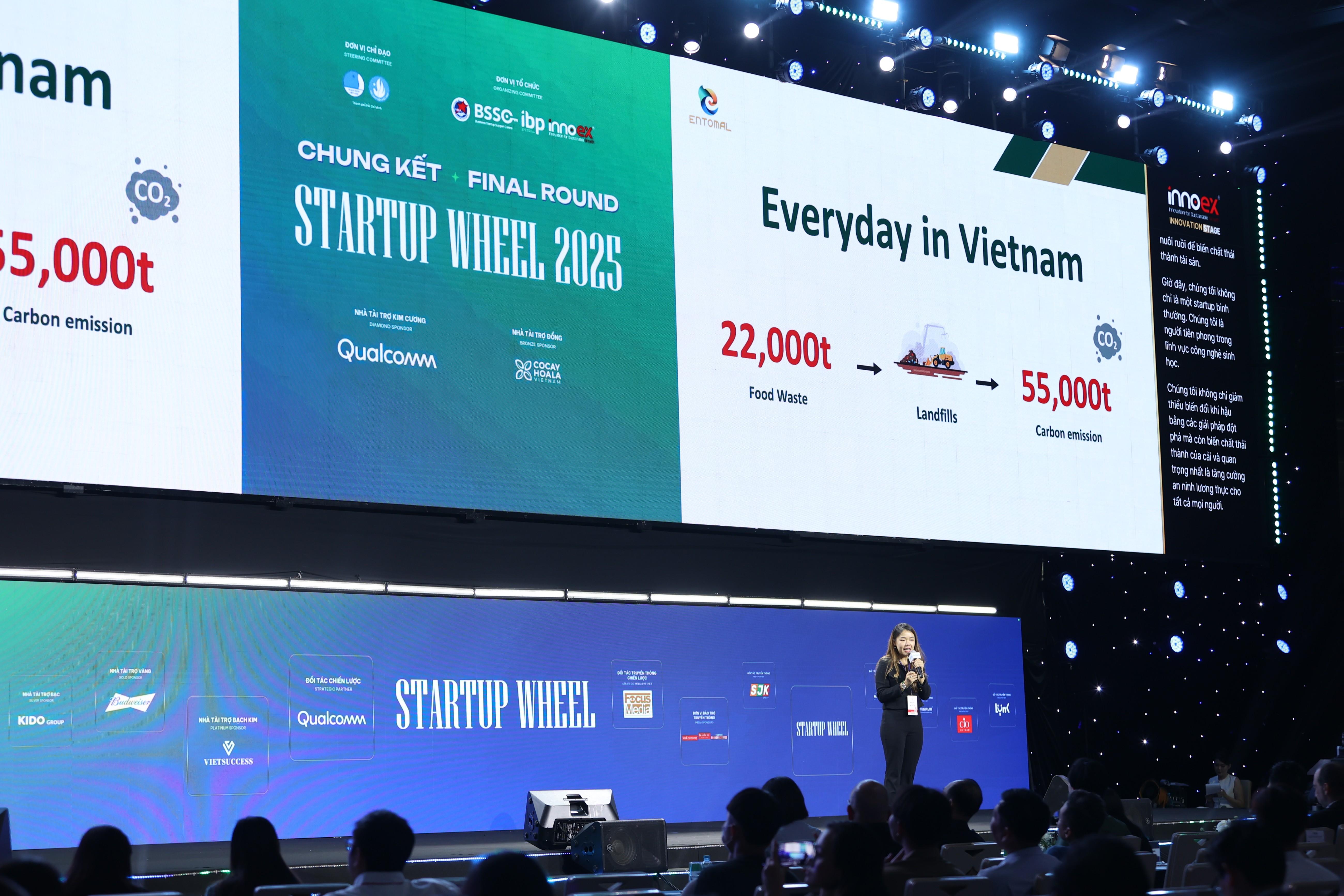
Entomal Biotech – Turning Food Waste into Insect Protein
Entomal Biotech, a sustainability-focused biotech startup from Malaysia, has been selected as Top 5 Startup Wheel 2025 (International Track) thanks to its breakthrough approach to food waste management using insects.
From Food Waste to High Value Resources
Food waste is one of the most pressing environmental issues in urban areas. When landfilled, organic waste decomposes and produces methane, a greenhouse gas far more potent than CO₂. In this context, Entomal Biotech has taken a unique approach. Instead of using traditional waste management methods, the startup leverages black soldier fly (BSF) larvae to convert organic waste into valuable resources. Entomal proves that waste is not a burden but a potential asset.
For Entomal, organic waste becomes food for black soldier fly larvae, which can:
-
Reduce up to 90% of organic waste in just 24 hours
-
Convert waste into insect protein for animal feed and organic fertilizer

Proprietary Mobile BioConversion System
Entomal’s flagship innovation is the Entomal Mobile BioConversion System (EMBC), a patented 20-foot container that processes food waste directly at the source. The system can handle up to 1,500 kilograms of food waste per month and converts it into insect protein and organic fertiliser in just seven days. Sensors installed in the system continuously monitor temperature, humidity, ammonia and carbon dioxide levels to ensure optimal larvae growth.
To date, Entomal has deployed more than six decentralised EMBC units across Klang Valley, Malaysia. The company has processed over 50 tonnes of food waste and produced more than 20 tonnes of insect protein and organic fertiliser.

Cost Savings and Environmental Impact
Businesses that use EMBC benefit from:
-
Up to 25 percent reduction in waste management cost within six months
-
Access to carbon data and ESG reporting
-
No upfront investment required as the model operates on subscription basis
Each tonne of food waste treated in EMBC produces only 0.1 tonnes of CO₂ emissions, compared to 2.5 tonnes when waste decomposes in landfills. The process results in a 96 percent reduction in greenhouse gas emissions, making Entomal eligible for CO₂-equivalent carbon credits under VERRA VCS.

Circular Economy in Action
Entomal operates through an integrated supply chain:
-
Upstream: Waste collection and on-site treatment for hotels, malls, universities, and F&B businesses
-
Midstream: Technical system setup and BSF farming support
-
Downstream: Production of insect protein, fertiliser, and future insect oil
Malaysia imports large quantities of animal feed every year. By producing locally sourced and more affordable protein, Entomal contributes to food security and reduces dependency on imported feed ingredients.
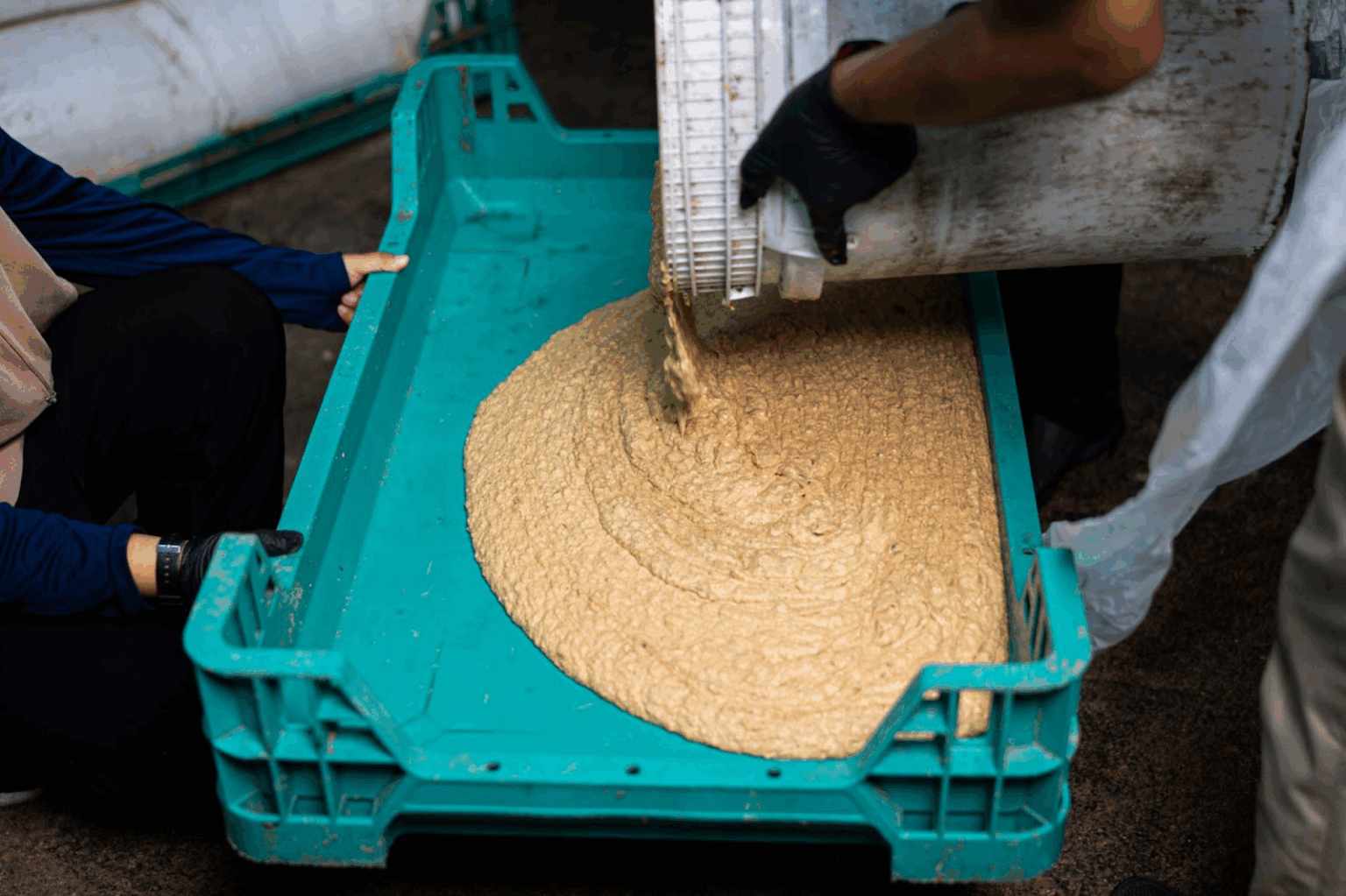
Grounded down food waste to be fed to the larvae.
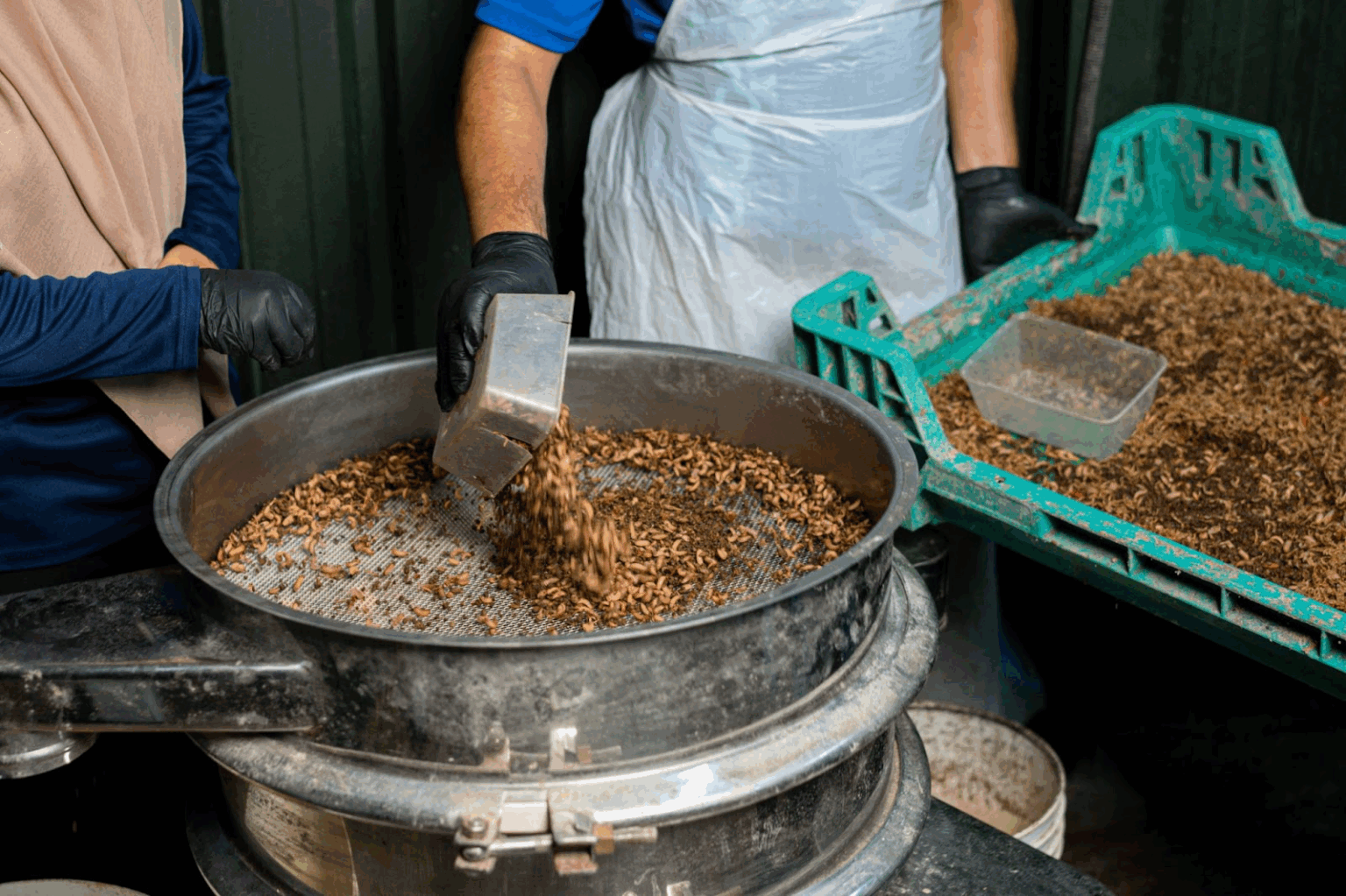
Harvesting the larvae – sifting out the frass. The larvae become insect protein for use in animal feed and the frass is used as organic fertiliser.
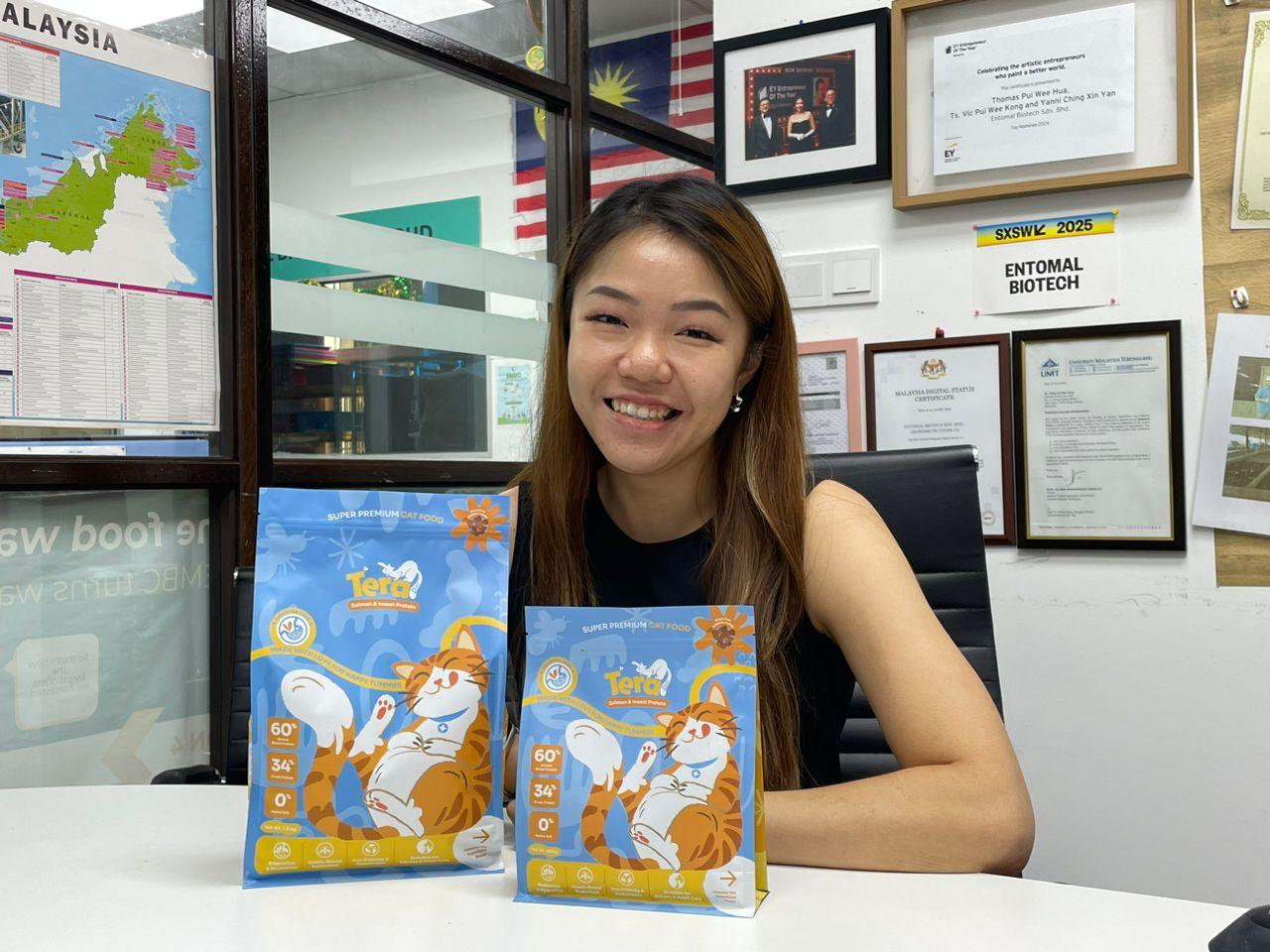
Pet Project – Dr Yanni with Tera Diet, Malaysia’s 1st Insect-based Cat Food (more info on IG: teradietpet)
Purpose Driven Innovation
Beyond technology, Entomal emphasizes community education on waste segregation and small-scale larvae farming. The company trains local farmers and incorporates larvae-rearing programs into schools to raise environmental awareness.
The founding team, including Vic Pui Wee Kong, Thomas Pui Wee Hua, and Dr. Yanni Ching Xinyan, has received numerous awards for innovation and sustainable impact, most notably the EY Entrepreneur Of The Year Malaysia 2024.
Dr. Yanni shared:
“When protecting the environment creates economic value, the model becomes self-sustaining and scalable. We want waste management to benefit everyone.”

Entomal is expanding across Southeast Asia, aiming to build a distributed network of flexible waste management solutions. With just a container and a steady source of organic waste, any business or community can process waste and generate revenue.
Startup Wheel is proud to support ventures like Entomal Biotech that deliver clear social and environmental impact. Their success demonstrates the spirit of innovation for a sustainable future.

