
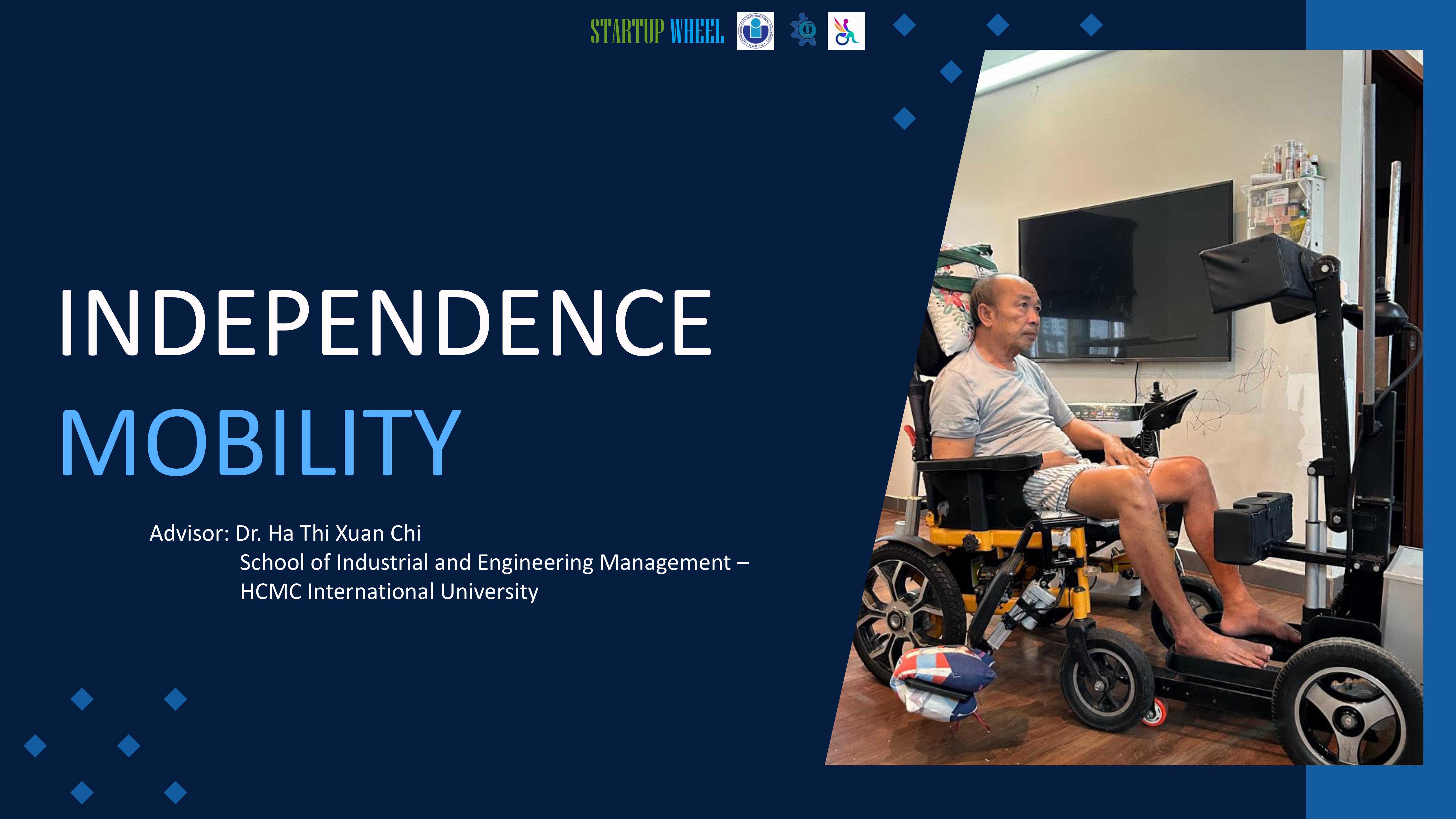
Independence Mobility
Independence Mobility is designed to support stroke survivors at a cost accessible to Vietnamese households. Its innovative design facilitates seamless transitions between sitting and standing, reducing caregiver burden while restoring independence in mobility and daily activities. The product enhances quality of life, extends longevity, and lowers overall treatment costs related to mobility issues. With direct control capabilities, adaptable wheels for both indoor and outdoor use, and a foldable design for easy storage or conversion into a seated position, it ensures maximum convenience. Additionally, the standing position supported by Independence Mobility accelerates recovery by improving bone density, enhancing blood circulation, supporting digestive function, and uplifting the patient’s mental well-being. This solution empowers stroke survivors to reintegrate into daily life while alleviating the strain on caregivers.
Problem & Solution
Vietnam records over 200,000 stroke cases annually, with many patients losing mobility and requiring 6 to 18 months for rehabilitation. The risk of permanent disability makes daily activities challenging and increases dependence on caregivers. Independence Mobility enables patients to transition between sitting and standing independently, enhancing physical health, mental well-being, and boosting recovery, helping them reintegrate into daily life more easily.
Features & Benefits
- Flexible Mobility Support:
- Smooth transition between sitting and standing positions.
- Adjustable wheels for indoor and outdoor use.
- Foldable design, allowing for convenient storage and transportation.
- Accelerates Health Recovery:
- Enhances bone density and blood circulation through upright posture.
- Supports digestion, promoting overall well-being.
- Reduces psychological stress, giving patients more motivation for recovery.
- Reduces Long-Term Care Costs:
- Promotes self-reliance, decreasing dependence on others.
- Minimizes expenses on long-term caregiving services.
Business Model & Target Customers
- Two distribution models:
- Direct product sales to individuals and healthcare organizations.
- Rental services to increase accessibility for more users.
- Potential customers:
- Hospitals, humanitarian organizations, and charitable foundations supporting stroke patients.
- Family members of patients, seeking effective rehabilitation solutions.